Welcome to First Light Recovery Center
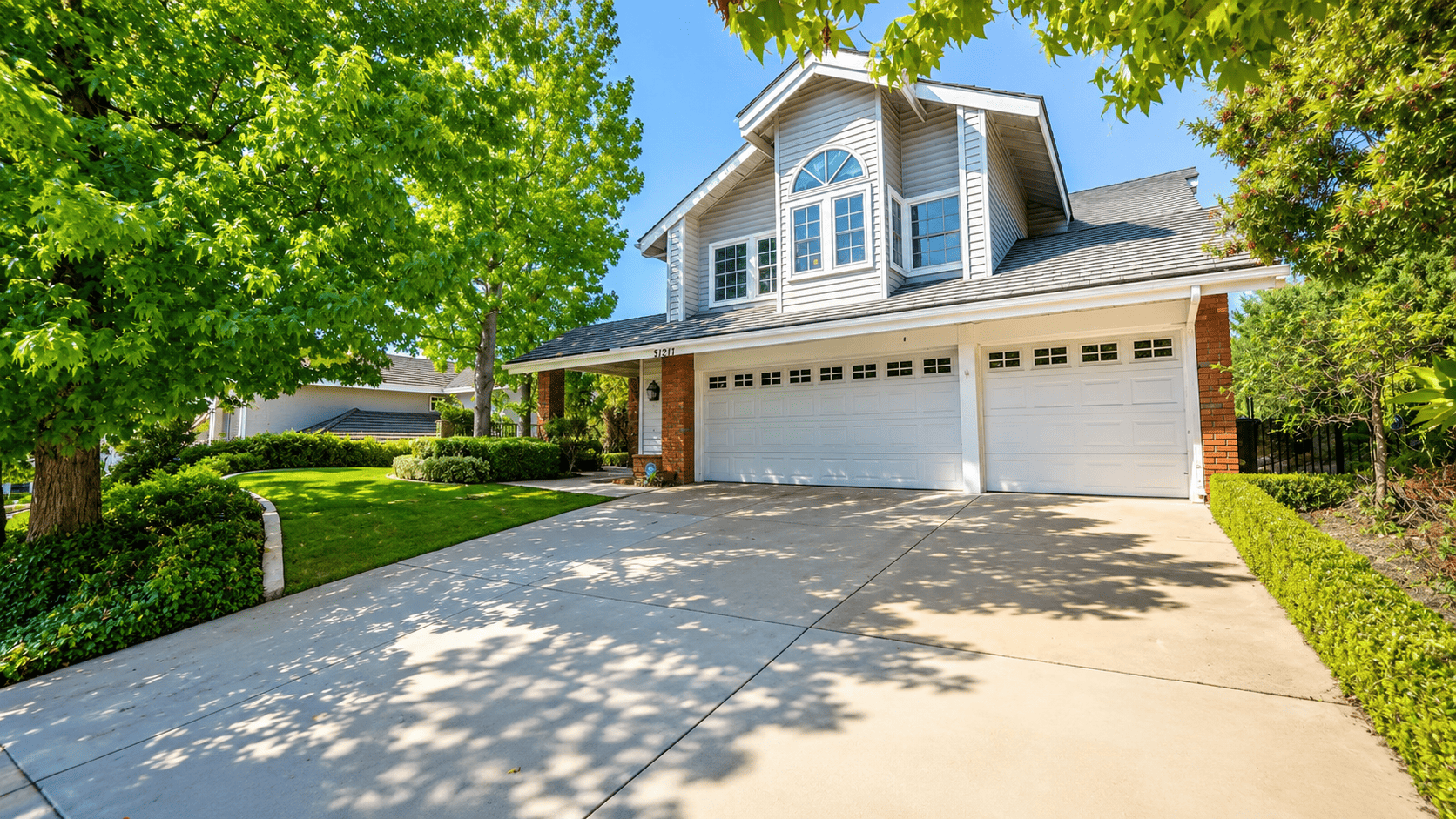
First Light Recovery operates two residential mental health homes in San Juan Capistrano. Our Paseo Barona house delivers the same compassionate, evidence-based care in a comfortable, home-like setting — a safe, structured place where adults from Southern California and across the U.S. can focus fully on their mental health.
27732 Paseo Barona, San Juan Capistrano, CA 92675
(949) 776-2031
Open 24 hours
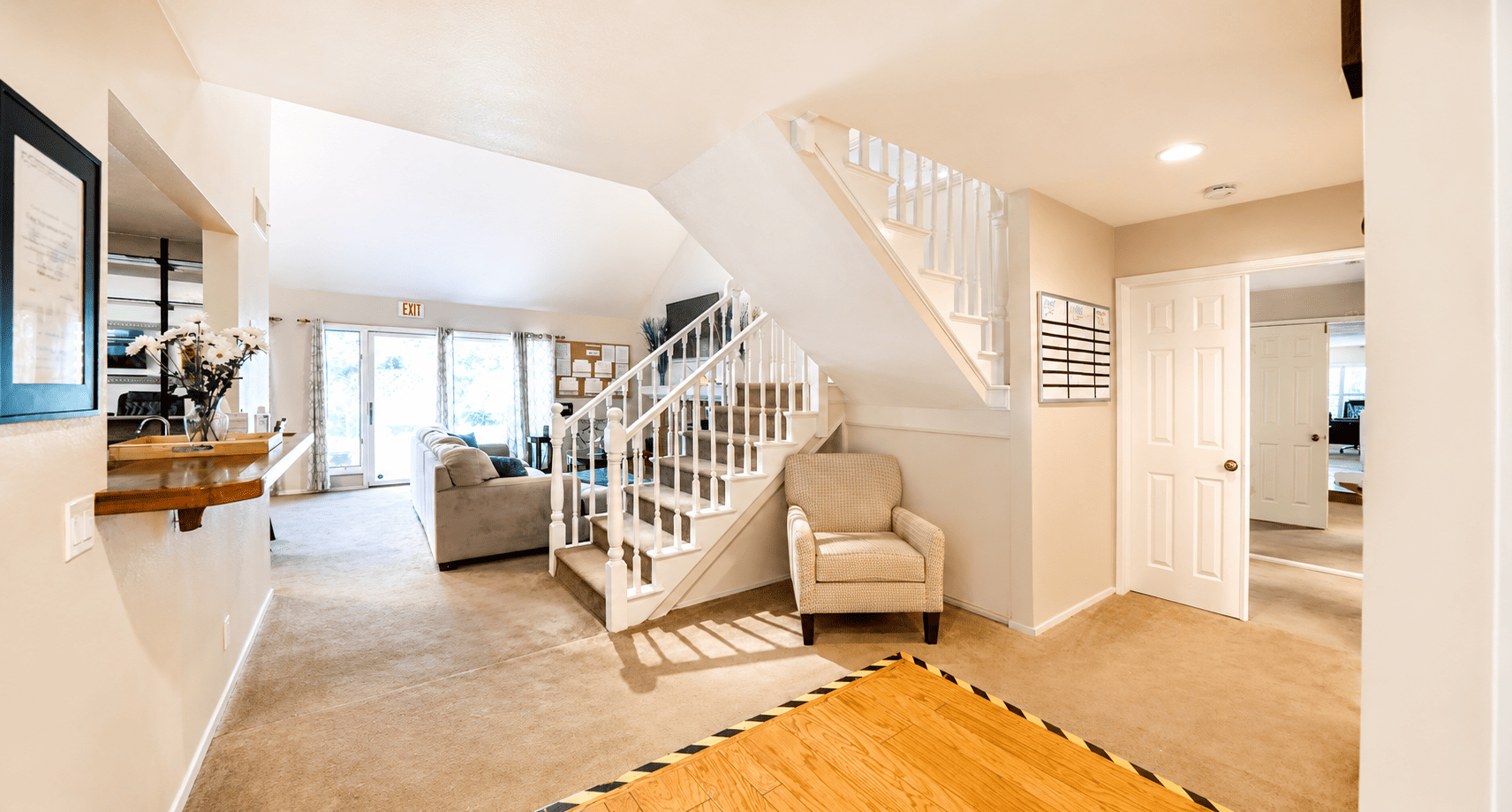
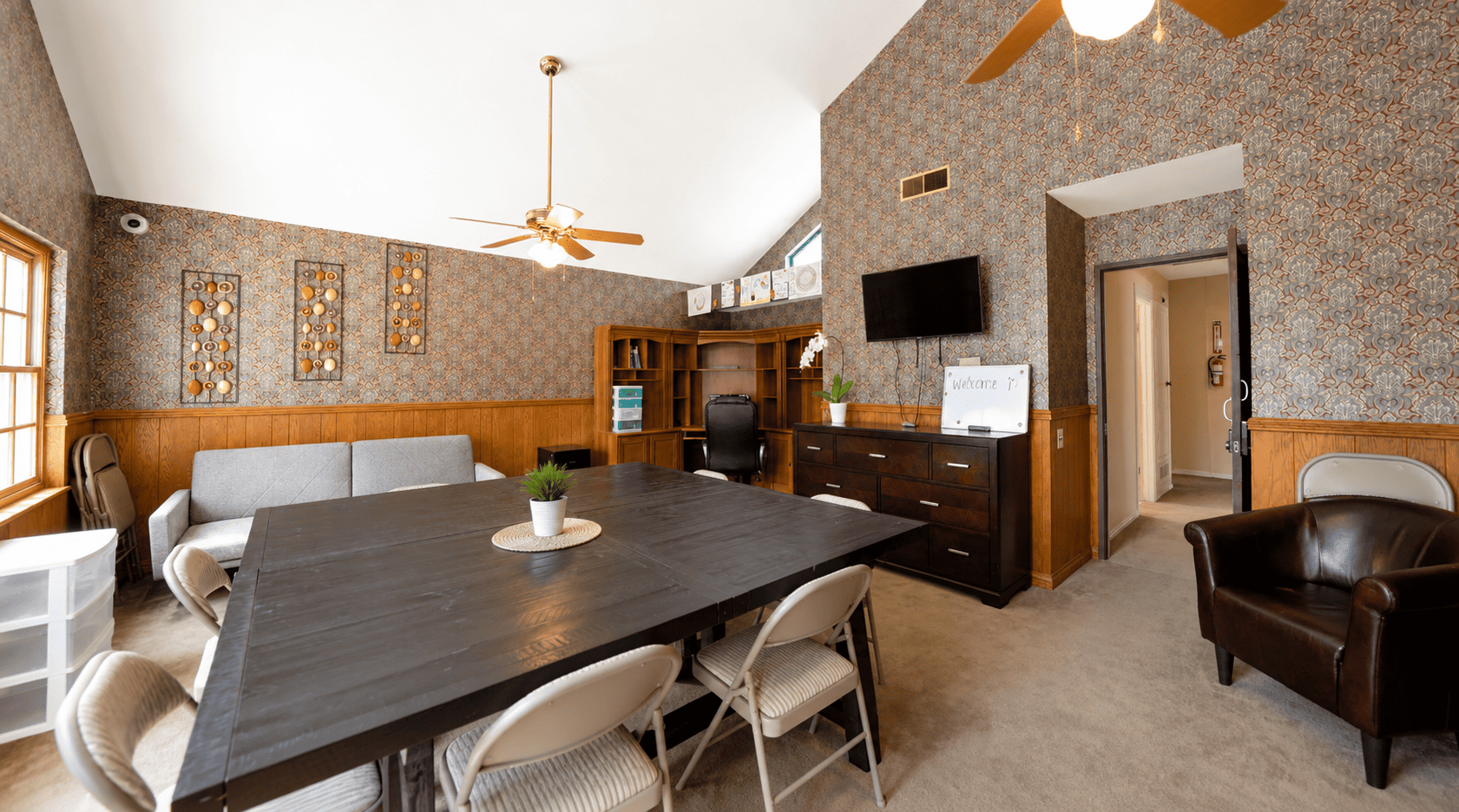
Life at 27732 Paseo Barona feels closer to living in a comfortable home than checking into a hospital. Trained mental health staff are on-site around the clock, and licensed clinicians lead programming throughout the week — so support is there whether symptoms flare in the afternoon or the middle of the night. The program is CARF-accredited and dedicated entirely to primary mental health care rather than addiction-first treatment.
Your stay begins with a low-pressure intake: we confirm logistics, talk through what’s been going on lately, and screen for anything that needs immediate attention. From there, the early focus is stabilization — settling into a predictable daily rhythm, restoring sleep and self-care habits, and feeling safe in the home.
Active treatment follows through our residential mental health program: individual sessions, group work, and real-world practice that makes managing your thoughts, emotions, and relationships feel achievable long after you leave.
As you reach your goals, attention shifts to preparing for what comes next. We reinforce coping skills and personal accountability, then map out aftercare so the step down to outpatient care feels manageable rather than overwhelming. And because each house holds no more than six clients, you’ll never feel like just a number — there’s always room to breathe, reset, and recover.
Cost shouldn’t stand between you and quality mental health care. First Light Recovery is in-network with most major insurers — including Aetna, Anthem, Cigna, Kaiser, Optum, United Healthcare, and the ILWU. Our admissions team handles insurance verification and walks you through every step of treatment planning.
Call (949) 844-3573 or contact admissions to verify your benefits. (See our insurance FAQ.)
Our Paseo Barona home is built for adults who need more than a weekly therapy hour but don’t want — or need — a locked hospital environment.
We serve adults ages 18 to 59 who are ready to step away from daily stressors and into a program centered on symptom stabilization and rebuilding routine.
Because our focus is strictly primary mental health, we are not a dual-diagnosis or addiction-first facility.
Clients often come to our San Juan Capistrano homes struggling with:
We also work with obsessive-compulsive symptoms, symptoms of thought disorders, and long-standing personality patterns that leave people feeling stuck.
Residential care may be the right fit if your sleep, appetite, hygiene, or ability to keep up with work or school has slipped — or if outpatient therapy hasn’t been enough. Our admissions team will help you determine the right level of care and next steps.


Our Paseo Barona residence provides residential care for a range of primary mental health conditions. The program is mental health–only — not dual-diagnosis or addiction-first — and serves adults ages 18 to 59 who need more support than outpatient therapy offers but prefer an unlocked, home-like setting.
We provide treatment for:
If day-to-day functioning — sleep, appetite, hygiene, work, or school — has been affected, or outpatient care hasn’t moved the needle, residential treatment may be appropriate. Our admissions team will work with you to find the right level of care.
Treatment at Paseo Barona blends evidence-based therapy with real-world application, so the skills you learn don’t stay locked in a workbook. A typical week combines individual sessions with groups focused on emotional regulation, interpersonal communication, boundaries, and daily functioning — all within a structured, supportive household.
Your treatment plan can include:
First Light Recovery uses a social rehabilitation model, which means the household itself becomes part of therapy. Coping skills get practiced at mealtimes, during downtime, on outings, and through daily responsibilities, with staff close by whenever challenges surface. It’s an especially good fit for people who’ve tried outpatient therapy or completed a short hospitalization and still feel adrift.
Length of stay is individualized, though most clients spend 30 to 90 days with us — enough time to stabilize and build changes that last. As discharge approaches, we collaborate on a continuing-care plan, most often a step down to outpatient therapy or at-home support, so progress keeps compounding over time.
Care at our Paseo Barona location pairs clinical treatment with everyday practice. You’ll have 24/7 access to trained mental health staff on-site, with licensed clinicians facilitating our residential mental health program during the week.
Evidence-based therapies
In a social-rehabilitation model, the home is the treatment setting — not just where you sleep between sessions. You practice coping skills over meals, in free time, on outings, and through daily responsibilities, with staff nearby when things get hard. You keep access to electronics and communication so you can stay connected while you focus on recovery, and you rebuild real-world life skills — hygiene, nutrition, sleep, and personal care — in a natural setting. With a maximum of six clients per house, care stays personal.
Treatment follows a clear arc: a relaxed intake, stabilization (predictable routine, better sleep, safety at home), active individual and group work, and finally aftercare readiness. Most clients stay 30 to 90 days, though every stay is individualized. When discharge nears, we build a step-down plan to outpatient or at-home care together.

First Light Recovery operates two home-like residential facilities in San Juan Capistrano, each offering the space to step back from daily life and focus on stabilization and recovery. Both homes sit in quiet South Orange County neighborhoods with easy access from Interstate 5 for clients and visiting families.
Southern California Regions We Serve:
Our Mission Viejo location gives nearby clients another option, and our Casa Grande Dr home is just minutes away here in San Juan Capistrano. We also welcome out-of-state clients when clinically appropriate and covered by insurance — admissions regularly helps clients traveling from Oregon, Washington, Colorado, Texas, and beyond coordinate their trip.
24/7 Expert Mental Health Care
Accepts Most Insurance Providers
5-Star Rated, CARF Certified
5-Star Rated, CARF Certified
Healing is a personal journey, and you don’t have to face it on your own. Many of our clients and their families find comfort in our residential homes, which provide supportive, structured care that feels more compassionate and welcoming than typical residential treatment options.
Considering treatment at our Paseo Barona home? Here are answers to the questions clients and families ask most about our San Juan Capistrano residences.
We provide residential care for primary mental health conditions, including anxiety disorders, mood disorders such as depression and bipolar disorder, thought disorders, personality disorders, OCD, PTSD, CPTSD, ADHD, self-harm, and suicidal ideation.
Stays are individualized, but 30 to 90 days is typical — enough time to stabilize and practice new coping skills before stepping down to outpatient or at-home care.
No. Our San Juan Capistrano homes focus exclusively on primary mental health care for adults ages 18 to 59. We are not an addiction-first or dual-diagnosis facility.
Plans may combine CBT, DBT, individual psychotherapy, group therapy, family therapy, and trauma-informed therapy, along with daily skill-building woven into life in the home.
Yes — we are in-network with most major insurers, including Aetna, Anthem, Cigna, Kaiser, Optum, United Healthcare, and the ILWU. Our admissions team can verify your benefits during intake. (Insurance FAQ)
Most families arrive via I-5 (Santa Ana Freeway) and take local streets to the home. Our admissions team will send exact directions to the Paseo Barona address before your arrival.
Yes — admissions helps coordinate travel and your arrival. John Wayne Airport (SNA) is the closest airport; San Diego (SAN) and LAX are also options depending on where you’re flying from.
Each house holds a maximum of six residents, which keeps care personal and gives everyone enough interaction to practice the strategies learned in treatment.
Visitation is scheduled with the clinical team based on where your loved one is in treatment, so it’s best to pre-schedule. While in town, families often enjoy Mission San Juan Capistrano, the Los Rios Historic District, or the beaches in Dana Point and San Clemente.
Yes — family support matters during recovery. To protect the therapeutic environment, we keep specific visiting hours and policies, and we’ll share all the details when your loved one is admitted.
If you’re struggling with your mental health, you don’t have to face it alone. First Light Recovery offers compassionate care, expert treatment, and a real-world approach to empower you.
First Light Recovery
We firmly believe that the internet should be available and accessible to anyone, and are committed to providing a website that is accessible to the widest possible audience, regardless of circumstance and ability.
To fulfill this, we aim to adhere as strictly as possible to the World Wide Web Consortium’s (W3C) Web Content Accessibility Guidelines 2.1 (WCAG 2.1) at the AA level. These guidelines explain how to make web content accessible to people with a wide array of disabilities. Complying with those guidelines helps us ensure that the website is accessible to all people: blind people, people with motor impairments, visual impairment, cognitive disabilities, and more.
This website utilizes various technologies that are meant to make it as accessible as possible at all times. We utilize an accessibility interface that allows persons with specific disabilities to adjust the website’s UI (user interface) and design it to their personal needs.
Additionally, the website utilizes an AI-based application that runs in the background and optimizes its accessibility level constantly. This application remediates the website’s HTML, adapts Its functionality and behavior for screen-readers used by the blind users, and for keyboard functions used by individuals with motor impairments.
If you’ve found a malfunction or have ideas for improvement, we’ll be happy to hear from you. You can reach out to the website’s operators by using the following email
Our website implements the ARIA attributes (Accessible Rich Internet Applications) technique, alongside various different behavioral changes, to ensure blind users visiting with screen-readers are able to read, comprehend, and enjoy the website’s functions. As soon as a user with a screen-reader enters your site, they immediately receive a prompt to enter the Screen-Reader Profile so they can browse and operate your site effectively. Here’s how our website covers some of the most important screen-reader requirements, alongside console screenshots of code examples:
Screen-reader optimization: we run a background process that learns the website’s components from top to bottom, to ensure ongoing compliance even when updating the website. In this process, we provide screen-readers with meaningful data using the ARIA set of attributes. For example, we provide accurate form labels; descriptions for actionable icons (social media icons, search icons, cart icons, etc.); validation guidance for form inputs; element roles such as buttons, menus, modal dialogues (popups), and others. Additionally, the background process scans all the website’s images and provides an accurate and meaningful image-object-recognition-based description as an ALT (alternate text) tag for images that are not described. It will also extract texts that are embedded within the image, using an OCR (optical character recognition) technology. To turn on screen-reader adjustments at any time, users need only to press the Alt+1 keyboard combination. Screen-reader users also get automatic announcements to turn the Screen-reader mode on as soon as they enter the website.
These adjustments are compatible with all popular screen readers, including JAWS and NVDA.
Keyboard navigation optimization: The background process also adjusts the website’s HTML, and adds various behaviors using JavaScript code to make the website operable by the keyboard. This includes the ability to navigate the website using the Tab and Shift+Tab keys, operate dropdowns with the arrow keys, close them with Esc, trigger buttons and links using the Enter key, navigate between radio and checkbox elements using the arrow keys, and fill them in with the Spacebar or Enter key.Additionally, keyboard users will find quick-navigation and content-skip menus, available at any time by clicking Alt+1, or as the first elements of the site while navigating with the keyboard. The background process also handles triggered popups by moving the keyboard focus towards them as soon as they appear, and not allow the focus drift outside it.
Users can also use shortcuts such as “M” (menus), “H” (headings), “F” (forms), “B” (buttons), and “G” (graphics) to jump to specific elements.
We aim to support the widest array of browsers and assistive technologies as possible, so our users can choose the best fitting tools for them, with as few limitations as possible. Therefore, we have worked very hard to be able to support all major systems that comprise over 95% of the user market share including Google Chrome, Mozilla Firefox, Apple Safari, Opera and Microsoft Edge, JAWS and NVDA (screen readers).
Despite our very best efforts to allow anybody to adjust the website to their needs. There may still be pages or sections that are not fully accessible, are in the process of becoming accessible, or are lacking an adequate technological solution to make them accessible. Still, we are continually improving our accessibility, adding, updating and improving its options and features, and developing and adopting new technologies. All this is meant to reach the optimal level of accessibility, following technological advancements. For any assistance, please reach out to