

The 5 Stages of Grief: What They Are and How to Move Through Them
Key Takeaways
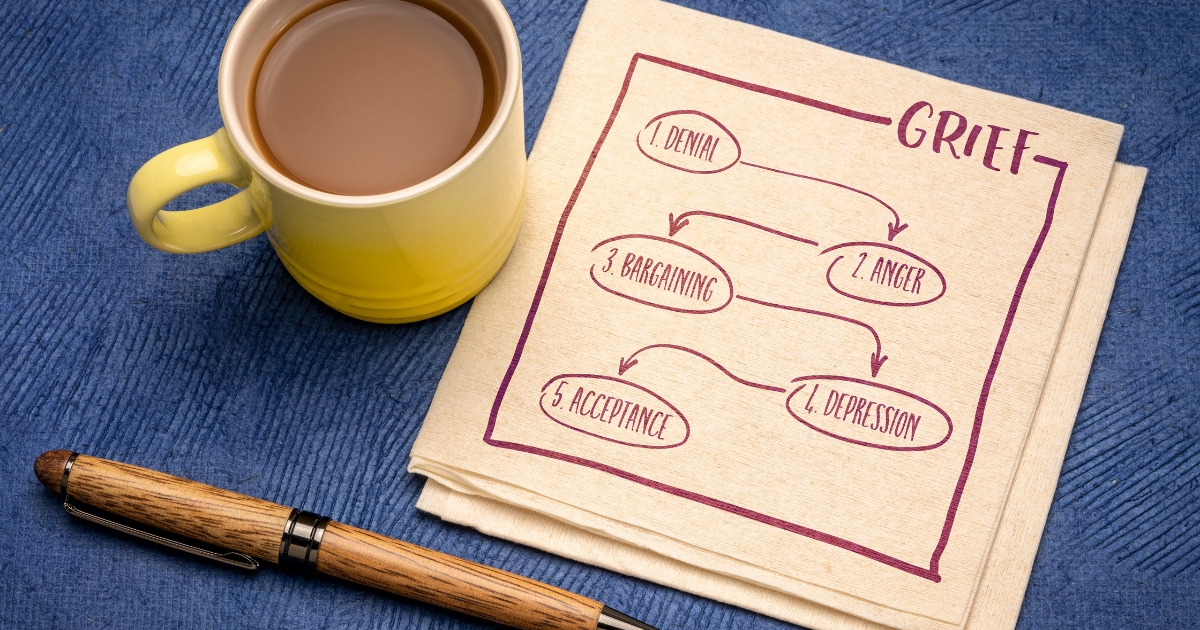
- The five stages of grief are denial, anger, bargaining, depression, and acceptance, first described by psychiatrist Elisabeth Kübler-Ross in 1969.
- Grief is not a straight line. People move between stages, revisit them, or skip some entirely, and all of these patterns are normal.
- Acceptance does not mean forgetting. It means learning to carry the loss while rebuilding a meaningful life.
- Some grief needs professional care. Intense grief that disrupts daily life for a year or more may signal prolonged grief disorder.
- Healthy coping strategies help. Connection, routine, self-care, and grief counseling and support all make the grief process and healing more manageable.
Losing someone you love can turn your world upside down. One day life feels familiar, and the next, everything seems different. You may feel numb, furious, guilty, or deeply sad, sometimes all in the same hour. Understanding the stages of grief can help you make sense of these emotional responses to death and remind you that what you are feeling is a natural part of coping with loss and bereavement.
This guide explains each stage, why grief looks different for everyone, how to recognize when grief becomes something more serious, and which healthy grief coping strategies can support you as you heal.
What Are the Stages of Grief and Why Do They Matter?
The stages of grief are a framework for understanding the common emotions people experience after a significant loss. Swiss-American psychiatrist Elisabeth Kübler-Ross introduced the model in her 1969 book On Death and Dying. As Cleveland Clinic explains, her original work focused on the dying process, and the framework was later applied to people grieving the death of someone close to them.
Today, the model is also used to describe grief after other major losses, such as divorce, job loss, a serious diagnosis, or the end of a relationship. Its greatest value is giving people language for feelings that can otherwise seem overwhelming or confusing.
The Five Core Stages and What Each One Represents
- Denial: Struggling to believe the loss has really happened.
- Anger: Frustration, blame, or rage aimed at doctors, family, yourself, or the unfairness of the loss.
- Bargaining: “What if” and “if only” thinking, often mixed with guilt or regret.
- Depression: Deep sadness as the full weight of the loss sets in.
- Acceptance: Acknowledging the reality of the loss and adjusting to life without the person.
Why Grief Unfolds Differently for Everyone
The stages were never meant to be a strict checklist. According to Cleveland Clinic’s guide to grief, not everyone experiences every stage, and they do not have to happen in any particular order. Many people move back and forth between stages or feel several at once.
Many factors affect how a person handles moving through mourning stages, including your relationship with the person, how the death happened, your cultural or spiritual beliefs, your support system, and your personal history with loss or mental health challenges. There is no “right” way or timeline for grief.
Denial: The First Response to Loss
Denial is often the first reaction to loss. You might think, “This can’t be happening,” or catch yourself expecting a call or text from the person who died. Some people feel emotionally numb or go through the motions of funeral planning as if they are watching someone else do it.
How Denial Protects Us in Early Mourning
Denial is not a sign of weakness. It works as a psychological buffer, giving your mind time to absorb news that is too painful to process all at once. By letting reality in gradually, denial helps you get through the first days and weeks. As the shock fades, the emotions it was holding back usually begin to surface.
Anger, Bargaining, and Depression in the Stages of Grief
Anger often appears once denial begins to lift. You may feel angry at doctors, family members, the person who died, God, or yourself. Anger can feel uncomfortable, but it is a normal way of expressing pain and a sense of injustice.
Bargaining is the mind’s attempt to regain control. It can sound like, “If only I had noticed the signs sooner,” or “I would give anything for one more day.” Bargaining is frequently tied to guilt, even when nothing could have changed the outcome.
Depression in grief is a deep, heavy sadness that sets in as the reality of the loss becomes clear. You may withdraw from others, lose interest in daily activities, have trouble sleeping, or feel hopeless about the future. This sadness is a natural response to loss. However, if it becomes severe or persistent, it is important to reach out for professional help.
Acceptance: Reaching a New Normal After Loss
Acceptance is often described as the final stage of grief, but it is better understood as a gradual shift. Over time, many people find they can think about their loved one with less intense pain and begin re-engaging with life, relationships, and goals.
What Acceptance Really Means and What It Doesn’t
Acceptance does not mean you are “over it,” that the loss was okay, or that you have stopped missing the person. It means you acknowledge the loss as real and permanent and are learning to live with it. Waves of sadness may still come, especially on anniversaries or holidays, and that is normal. Acceptance is about building a new normal in which love and memories remain part of your life.
Types of Grief Reactions and When Additional Help May Be Needed
There are several types of grief reactions. Anticipatory grief begins before a loss, such as when a loved one has a terminal illness. Disenfranchised grief occurs when others do not treat a loss as worthy of mourning, such as the death of a pet or a death by suicide or overdose that people avoid discussing. Traumatic grief can follow sudden, violent, or unpredictable deaths. For most people, the intensity of grief eases gradually over time, but for some, it does not.
Recognizing Prolonged Grief Symptoms That Require Professional Support
In March 2022, the American Psychiatric Association added prolonged grief disorder to the DSM-5-TR. According to the APA’s overview of prolonged grief disorder, the loss must have occurred at least a year earlier for adults (six months for children and adolescents), and symptoms must be present nearly every day for at least the past month and cause significant distress or problems functioning. Common prolonged grief symptoms include:
- Intense yearning or longing for the person who died
- Preoccupation with thoughts or memories of the person
- Feeling as though part of yourself has died, or a disrupted sense of identity
- Marked disbelief about the death or avoidance of reminders
- Intense loneliness or feeling that life has no meaning
- Difficulty reintegrating into work, relationships, or activities
Unexpected or violent deaths, the loss of a child, social isolation, and a history of depression or PTSD can raise the risk, according to Mayo Clinic. Without treatment, complicated grief may also lead to depression, anxiety, sleep problems, or alcohol and substance misuse.
If you are having thoughts of suicide, call or text 988 in the U.S. to reach the 988 Suicide & Crisis Lifeline, or contact your local emergency services.
Healthy Grief Coping Strategies That Support Healing
- Allow yourself to feel. Let emotions come without judging them or rushing the grief process and healing.
- Stay connected. Lean on friends, family, faith communities, or grief support groups.
- Protect your health. Eat regular meals, stay active, and prioritize sleep.
- Avoid numbing the pain. Relying on alcohol or drugs to cope can delay healing and create new problems.
- Honor your loved one. Journaling, creating a memory box, or marking special dates can keep their memory close.
- Seek grief counseling and support. A therapist can help you process complex emotions and develop tools for moving forward.
Find Compassionate Support at First Light Recovery
Grief can feel isolating, but you do not have to face it alone. If a loss has left you struggling with depression, anxiety, trauma symptoms, or emotions that make daily life hard to manage, First Light Recovery can help. Our residential mental health program in Orange County offers adults individualized care, including individual, group, and family therapy, CBT, DBT, and trauma-informed treatment, so you can work through the stages of grief and build healthy coping skills.
Contact First Light Recovery today to speak with our admissions team and learn how we can support you.

FAQs
-
How long does each of the stages of grief typically last?
There is no set timeline for any stage. Some stages may last days, while others may last months or return unexpectedly around anniversaries and holidays. For most people, the intensity of grief gradually softens over time. If grief remains severe and disruptive a year or more after a loss, talk with a doctor or mental health professional.
-
Can someone skip certain stages of grief entirely?
Yes. Not everyone experiences all five stages, and they rarely occur in a neat order. Skipping a stage does not mean you are grieving incorrectly. The model is a guide, not a rulebook.
-
What are the most common types of grief reactions people experience?
Common reactions include sadness, shock, numbness, anger, guilt, anxiety, and loneliness. Physical symptoms such as fatigue, changes in appetite, and trouble sleeping are also common. Grief types include anticipatory, disenfranchised, traumatic, and prolonged grief.
-
When should I seek grief counseling and support after a loss?
You can seek grief counseling and support at any point after a loss, and early counseling may help people at higher risk of complicated grief. Support is especially important if grief makes it hard to function at work or home, if you feel hopeless, or if you are using alcohol or drugs to cope. If you have thoughts of harming yourself, call or text 988 right away.
-
Are there healthy grief coping strategies that help during the stages of grief?
Many healthy grief coping strategies can help during the stages of grief. Talking about your feelings, staying connected to others, keeping a daily routine, and caring for your physical health all support healing. Honoring your loved one’s memory and working with a grief counselor can also help you process the loss and move forward.
References
- American Psychiatric Association. (n.d.). Prolonged grief disorder. https://www.psychiatry.org/patients-families/prolonged-grief-disorder
- Cleveland Clinic. (n.d.). What are the stages of grief? Health Essentials. https://health.clevelandclinic.org/5-stages-of-grief
- Cleveland Clinic. (n.d.). Grief. Health Library. https://my.clevelandclinic.org/health/diseases/24787-grief
- Mayo Clinic. (n.d.). Complicated grief: Symptoms and causes. https://www.mayoclinic.org/diseases-conditions/complicated-grief/symptoms-causes/syc-20360374